What Does a Painter and Decorator Actually Do?
Most people know they need a painter but aren't sure what the job actually involves. A professional decorator in Carrickmacross explains the full scope of work and why it's more than just applying paint.
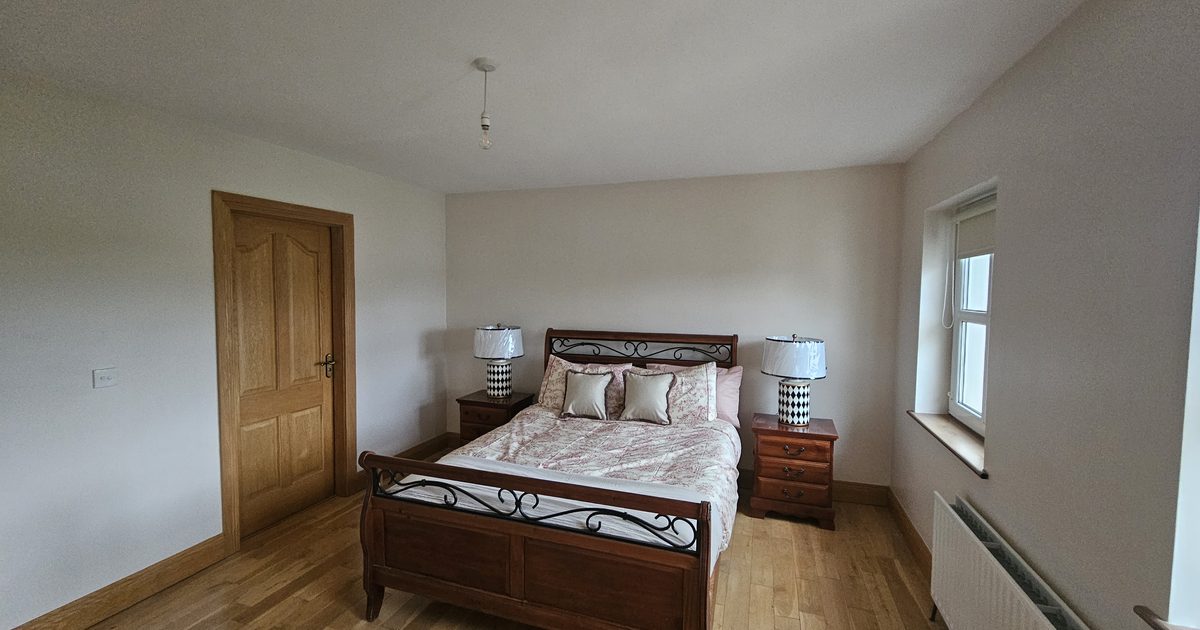
Most homeowners know they need a painter when their house looks tired or they’ve just built somewhere new. But there’s a common misconception about what hiring a professional painter and decorator actually involves — many people assume it’s essentially just buying paint and rolling it on, which is why they sometimes wonder why it takes as long as it does and costs what it does.
As a professional painter and decorator working across Carrickmacross and Co. Monaghan, here’s an honest account of what the job actually involves.
The Job Starts Before Any Paint Is Opened
The preparation stage is the foundation of every quality decoration job and typically takes up 40-50% of the total time on a project. This includes:
Surface assessment. Walking every room and examining walls, ceilings, and woodwork in good light — including raking light that reveals imperfections normal lighting hides. Identifying cracks, holes, previous repairs, staining, moisture issues, and surfaces that need special treatment.
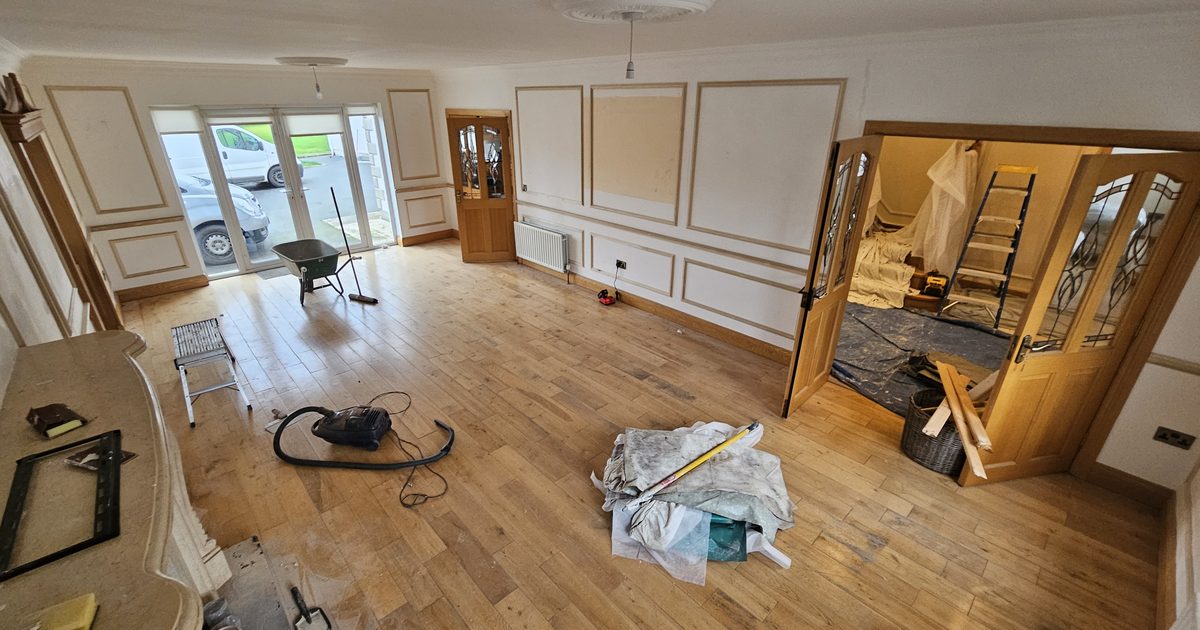
Protection. Laying dust sheets across floors, covering furniture, removing or protecting light fittings, and masking surfaces that aren’t being painted. Done properly, this stage prevents a significant amount of cleaning up later.
Filling. Every crack, hole, and surface defect gets filled with the appropriate product — fine surface filler for minor imperfections, harder two-part filler for deeper damage. Applied slightly proud of the wall, allowed to dry, sanded flush.
Sanding. All filled areas are sanded back. In many cases, the entire wall surface receives a light sand to remove any nibs, drips from previous paint jobs, or surface roughness that would show through the finish coat.
Washing. Walls are washed down with sugar soap solution to remove grease, dust, and contamination that would prevent proper paint adhesion. This is particularly important in kitchens, hallways, and around fireplaces.
Priming. Bare areas, stained surfaces, new plaster, and bare timber all receive the appropriate primer before any finish coat is applied.
What the Decoration Stage Actually Involves
Cutting in. Every edge in a room — where the wall meets the ceiling, where the wall meets the coving, where the wall meets the woodwork, inside corners — has to be cut in carefully with a brush before rolling. This is where decorating skill is most visible. Clean, sharp lines at every edge are the hallmark of a professional result.
Rolling. Main wall and ceiling areas are rolled for speed and consistency. The roller size, pile depth, and technique all affect the quality of the result. Maintaining a wet edge to avoid lap marks is a fundamental skill.
Woodwork. Skirtings, architraves, door frames, doors, window boards, and any other timber elements are painted separately with appropriate products and technique. This includes sanding between coats, laying off (finishing with light parallel strokes to eliminate brush marks), and cutting in clean lines against the adjacent wall colour.
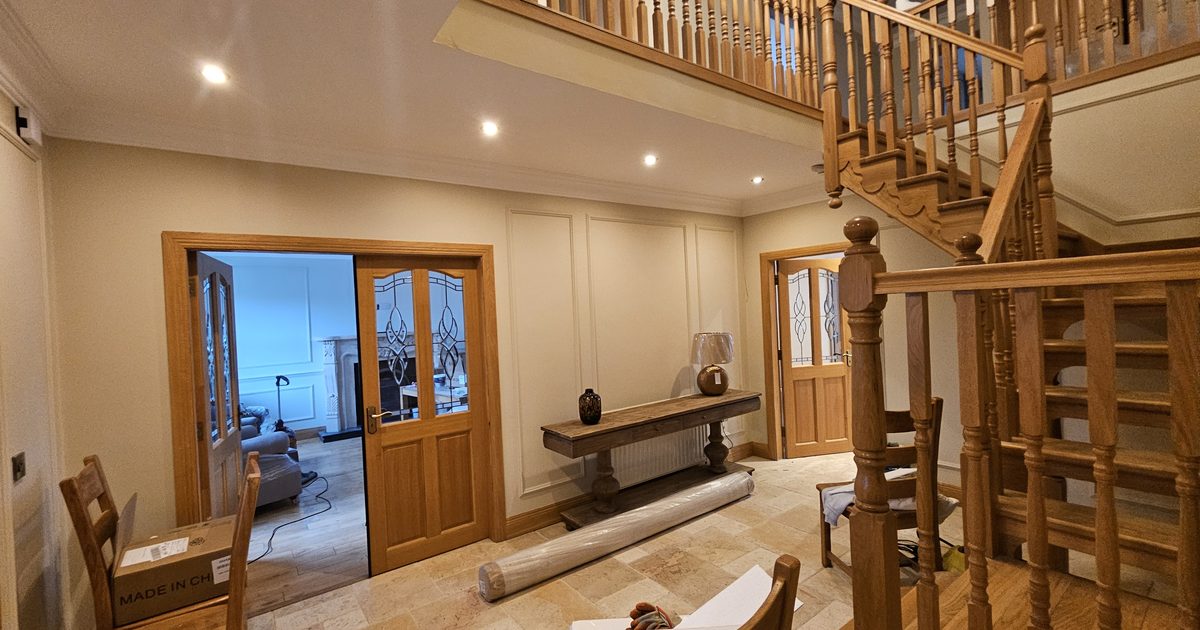
Detail work. Coving profiles, ceiling roses, architrave details, panelling, and any decorative elements require careful brush work and patience.
Additional Services
A full painter and decorator offers more than just paint application:
Wallpaper hanging. A skill in its own right — pattern matching, seam placement, working around obstacles. Not all painters hang paper; it requires specific experience.
Wallpaper stripping. Often a significant part of a redecoration project in older properties.
Minor plastering and rendering. Small repairs — patching holes, filling blown render, addressing surface defects — are part of the preparation work on most jobs.
Specialist finishes. Colour washing, limewash, textured finishes, and other decorative techniques fall within the decorator’s skill set.
What a Professional Brings That DIY Doesn’t
Speed. An experienced decorator works significantly faster than a careful DIY painter — not because they rush, but because efficiency comes with practice. Setup, preparation, and application all take less time.
Consistency. The ability to maintain consistent coverage, consistent sheen, and consistent cut-in lines across an entire room — and across multiple rooms — without the variation that shows in DIY work.
Problem solving. An experienced decorator recognises and knows how to handle problems — staining that needs blocking, surfaces that need special treatment, colour changes that need more preparation than a straightforward repaint.
The right tools. Quality brushes, appropriate roller sleeves, proper access equipment, and the materials knowledge to specify the right product for each surface.
All of this is what our full finish and decoration service delivers across Carrickmacross and Co. Monaghan. For more on the preparation work that makes the difference, read our guide on the hidden prep work that makes a professional finish.
Looking for a professional painter and decorator in Carrickmacross or Co. Monaghan? Call or WhatsApp Mark today: 0879197709. Free quotes on all decoration work.
Need professional full finish & decoration services in Carrickmacross?