How to Paint Skirtings and Architraves to a Professional Standard
Skirting boards and architraves are where most interior paint jobs let themselves down. A professional decorator in Carrickmacross explains the technique for getting woodwork right every time.
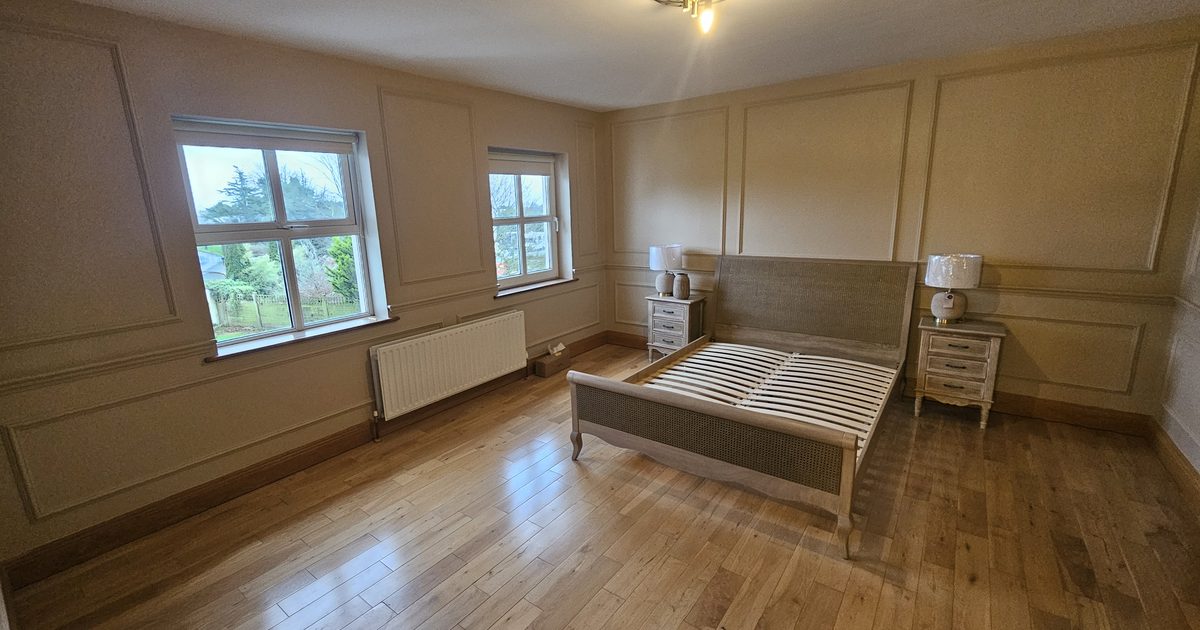
Skirting boards and architraves are the detail work that defines the overall standard of an interior decoration job. You can have perfect walls and ceilings, but if the woodwork is streaky, has visible brush marks, or has ragged lines where it meets the wall, the whole room looks amateur. Conversely, crisp, smooth woodwork elevates the overall finish significantly.
As a professional decorator working across Carrickmacross and Co. Monaghan, here’s the correct approach to woodwork that consistently produces a professional result.
Preparation: The Foundation of Good Woodwork
Assess the existing condition. Is the existing paint sound and well-bonded, or is it flaking, chipped, or lifting? Sound existing paint in good condition can be painted over with appropriate preparation. Failing paint must be stripped back.
Strip failing paint. Use a heat gun and scraper for larger areas, fine detail knives for profiles and moulding. Be cautious with the heat gun near the plaster at the top of skirtings — overheating the adjacent plaster causes discolouration.
Fill damage. Every chip, dent, crack, and hole gets filled — fine surface filler for minor damage, two-part wood filler for deeper damage. Apply slightly proud of the surface, allow to dry fully, sand flush.
Sand all surfaces. Whether repainting over existing paint or starting from bare timber, sand all woodwork with 120-grit paper. This provides a key for the new paint and removes minor surface imperfections. Follow with 180-grit for a smoother base.
On bare timber: Apply a wood primer to all bare areas before any paint. Do not skip this — bare timber absorbs paint unevenly and the primer is what creates the foundation for a smooth finish coat.
Clean all dust. Wipe down with a tack cloth or slightly damp cloth after sanding. Painting over sanding dust causes adhesion problems and a rough texture in the finish.
Caulk the joints. Apply decorator’s flexible caulk along the joint between the top of the skirting and the wall, and along the joint between the architrave and the adjacent plaster. Allow to cure as per the manufacturer’s guidance before painting.
The Right Paint and Tools
Paint choice: Water-based eggshell or satin is the modern professional standard for interior woodwork in Co. Monaghan homes. Dulux Trade Eggshell, Crown Trade Quick Dry Eggshell, or similar. These products dry faster, have lower odour, and produce a flexible, durable film that handles the movement of timber without cracking.
Oil-based products (traditional gloss) are harder and more durable in theory, but slower drying, higher odour, and prone to yellowing over time — particularly in rooms that don’t receive much natural light.
Brush choice: A 50-65mm flat brush for skirtings and architraves — enough width for efficient coverage without being unwieldy. A 25mm brush for narrow architraves and profiles. Quality bristles are important: a good quality synthetic brush (Hamilton Perfection, Purdy, or similar) releases paint more evenly and leaves fewer brush marks than a cheap alternative.
The Application Technique
Load the brush moderately. Dip to about one-third of the bristle depth and remove excess on the edge of the tin. Too much paint causes runs and blobs, particularly on the face of skirtings where paint accumulates at the bottom edge.
Apply along the length in long strokes. Work along the skirting in the direction of the grain — typically horizontal. Apply with moderate pressure to spread the paint, then lift the brush gradually at the end of each stroke.
Lay off. This is the step that makes woodwork look professional. After applying paint to a section, go back over it with very light strokes in one direction — along the length — to smooth out any brush marks and create a consistent, even surface. The brush should barely touch the surface for these final strokes.
Work in sections. Don’t try to paint a whole wall’s skirting in one stroke — work in 50-70cm sections, keeping a wet edge, and overlap each section slightly while it’s still wet.
The cut-in line. Where the skirting top meets the wall is visible and needs to be clean. Cut in carefully with the tip of the brush, keeping wall colour off the skirting top and skirting colour off the wall. For a crisp line, an experienced decorator does this freehand; for less experienced painters, low-tack masking tape along the wall above the skirting helps.
Between Coats
Allow the first coat to dry fully — water-based products typically 2-4 hours. Lightly sand with 180-grit or fine steel wool between coats to remove any dust nibs or minor brush marks. Remove all dust before the second coat.
The second coat is the one that shows. Apply with the same technique but with even more care and attention to an even, smooth result.
For how woodwork painting fits into the sequence of a full room decoration, read our guide on the right order to decorate a room from start to finish. For our full decoration service across Carrickmacross and Co. Monaghan, visit our full finish and decoration service page.
Want woodwork done properly in Carrickmacross or Co. Monaghan? Call or WhatsApp Mark today: 0879197709. Free quotes, professional standard throughout.
Need professional full finish & decoration services in Carrickmacross?