How to Plan a Full House Redecoration Without the Stress
A full house redecoration is one of the most disruptive home improvement projects you can undertake. A professional decorator in Carrickmacross explains how to plan it properly so it goes smoothly.
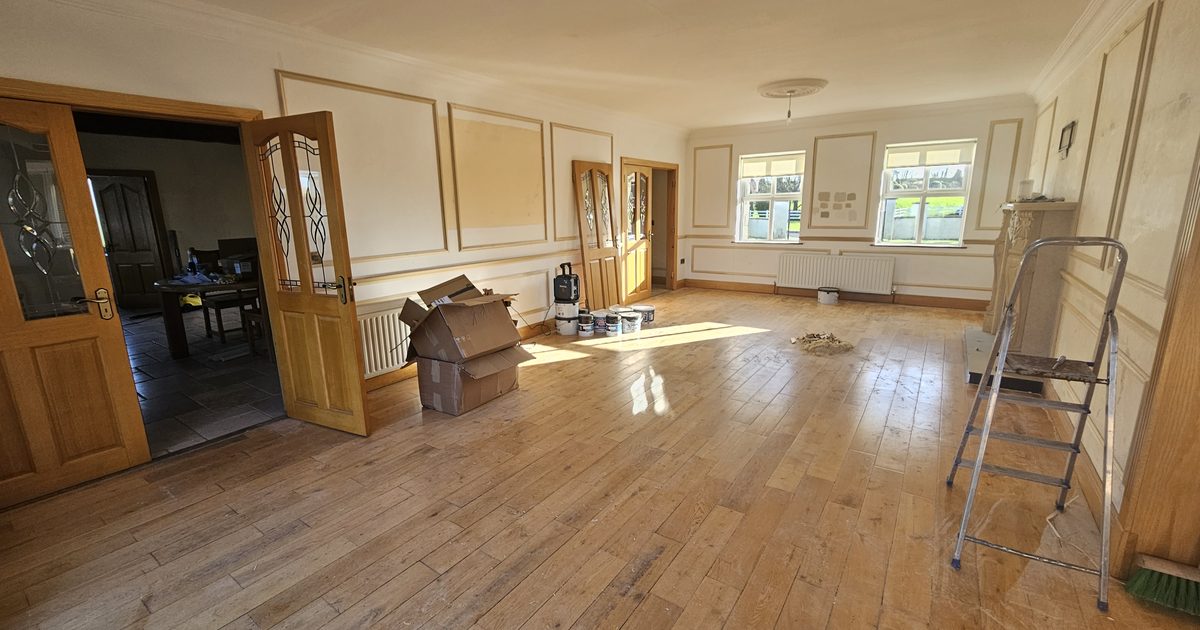
A full house redecoration is a significant undertaking — and without proper planning, it becomes stressful for everyone involved. Rooms out of action, furniture piled in the middle of the house, decisions being made on the fly about colours that should have been agreed weeks earlier. None of this is inevitable. With good planning, a full house redecoration can run smoothly, finish on schedule, and produce results you’ll be happy to live with for the next decade.
As a professional decorator working across Carrickmacross and Co. Monaghan, here’s how to approach a full house redecoration from the planning stage.
Stage 1: Assess What You Actually Need
Walk every room in the house honestly and assess its condition. Not every room necessarily needs the same level of work.
Some rooms may need a full strip-out — wallpaper removed, walls repaired, everything repainted from scratch. Others may need only a refresh — walls in good condition repainted in a new colour, woodwork touched up rather than fully repainted.
Be realistic about condition. A room where the paintwork is 10+ years old, where there are marks, scuffs, and visible repairs from picture hooks and furniture, typically needs a full repaint rather than a touch-up. Touch-ups on old, faded paint are rarely invisible.
Make a room-by-room list of what’s needed: strip paper / don’t strip, new colour / same colour, woodwork repaint / touch up only, ceiling repaint / leave. This becomes the basis for an accurate quote.
Stage 2: Decide on Colours Before Work Starts
This is where the most costly and frustrating delays happen on full house redecoration projects. Colours that haven’t been decided when the painter arrives mean work stopping while decisions are made, paint is sourced, and the job restarts.
Buy tester pots and paint large swatches on the actual walls — at least A3 size — before the decorator arrives. Look at them over several days, in different lighting conditions. Only commit to a colour once you’ve lived with the swatch for 48 hours.
Decide on woodwork colour at the same time. White or off-white eggshell throughout is the standard — but the specific white matters. A warm white woodwork with warm-toned walls; a cooler white woodwork with greyer walls.
Consider the whole house as a palette. Walk from room to room and consider how colours transition through the house. You don’t need every room to be the same colour, but the palette should feel coherent. Dramatic colour changes at every doorway can feel chaotic.
Stage 3: Deal With Pre-Decoration Work First
Some work needs to happen before the decorator arrives. If left until the decoration has started, it causes delays and potentially undoes finished work.
Plastering. Any walls that need replastering — blown plaster, new partitions, patched areas — should be done and allowed to cure fully before the decorator begins. Fresh plaster on an otherwise painted wall means mist coating those areas while the rest of the wall can be directly repainted.
Joinery. Any new skirtings, door frames, or other timber work should be fitted before decoration. Having a joiner arrive mid-decoration job to fit new skirtings means touching up or repainting the areas around them.
Electrical and plumbing. Any first-fix or second-fix work should be completed. Chasing walls for new cables after they’ve been decorated is expensive and frustrating.
Wallpaper stripping. If wallpaper is being removed, some homeowners do this themselves to reduce cost. If so, it should be done and the walls allowed to dry out before the decorator arrives. Wet walls from recent stripping cannot be immediately painted.
Stage 4: Agree the Sequence With Your Decorator
A full house redecoration is most efficiently done in a logical sequence that minimises rework and unnecessary disruption. Typically:
- Top floor first, working down
- Ceilings before walls
- Walls before woodwork
- Rooms in order of use (spare rooms and less-used spaces first, main living areas last)
Agree this sequence at the quoting stage. It affects how you’ll need to organise the house during the work — which rooms need to be cleared first, where displaced furniture goes temporarily.
Stage 5: Prepare the House for Work
Before the decorator arrives on day one:
- Clear walls of all pictures, mirrors, shelves, and wall-mounted items
- Remove curtain poles, blinds, and window treatments from rooms being decorated
- Pack away ornaments and anything fragile
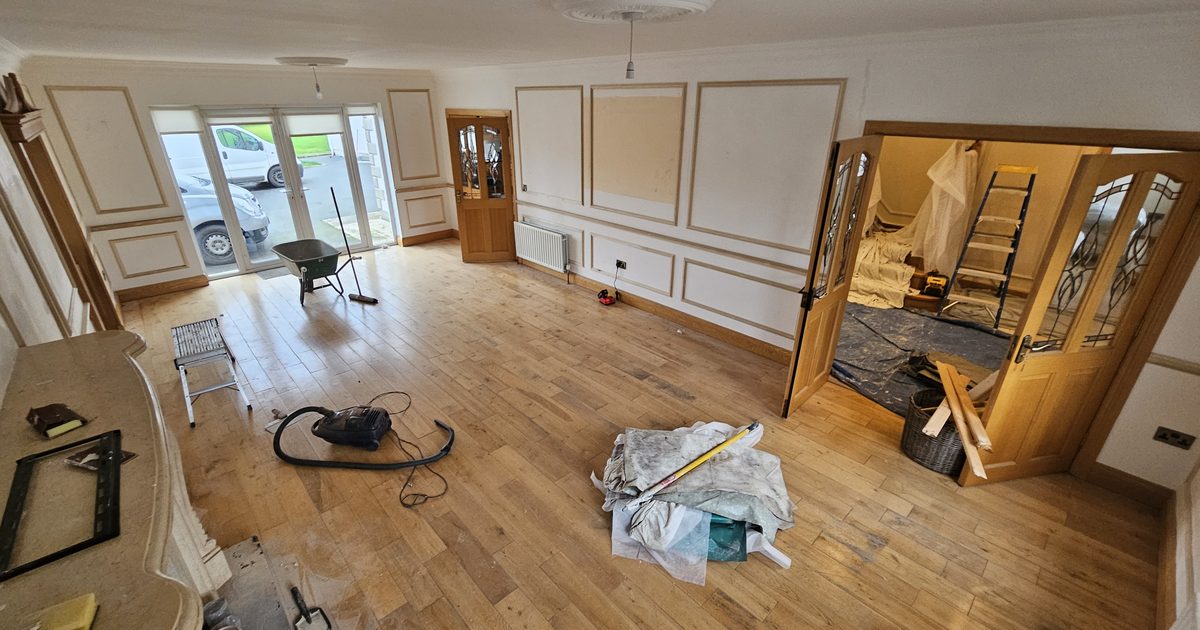
- Move what furniture you can — cleared rooms are faster and easier to work in
- Clear access to the rooms being worked on
The more preparation you do before work starts, the faster and smoother the job runs.
Stage 6: Plan for Living in the House During the Work
Most full house redecorations happen while the family is living in the property. This is manageable with realistic expectations:
- Rooms being worked on that day are inaccessible
- The house will smell of fresh paint — keep ventilation going
- Some disruption to normal routines is unavoidable
One practical approach: plan the sequence so the kitchen and at least one living area remain usable throughout. A decorator who understands this can sequence the work to minimise disruption to the most important rooms.
For the full picture of what a professional decoration job involves, read our guide on painting a full house — what to expect and how to plan. For our full decoration service across Carrickmacross and Co. Monaghan, visit our full finish and decoration service page.
Planning a full house redecoration in Carrickmacross or Co. Monaghan? Call or WhatsApp Mark to discuss your project and get a free quote: 0879197709.
Need professional full finish & decoration services in Carrickmacross?